Why TOK Is So Hard: Insights From an IBO Examiner April 18, 2020 | 4 min Read

Why TOK Is So Hard: Insights From an IBO Examiner

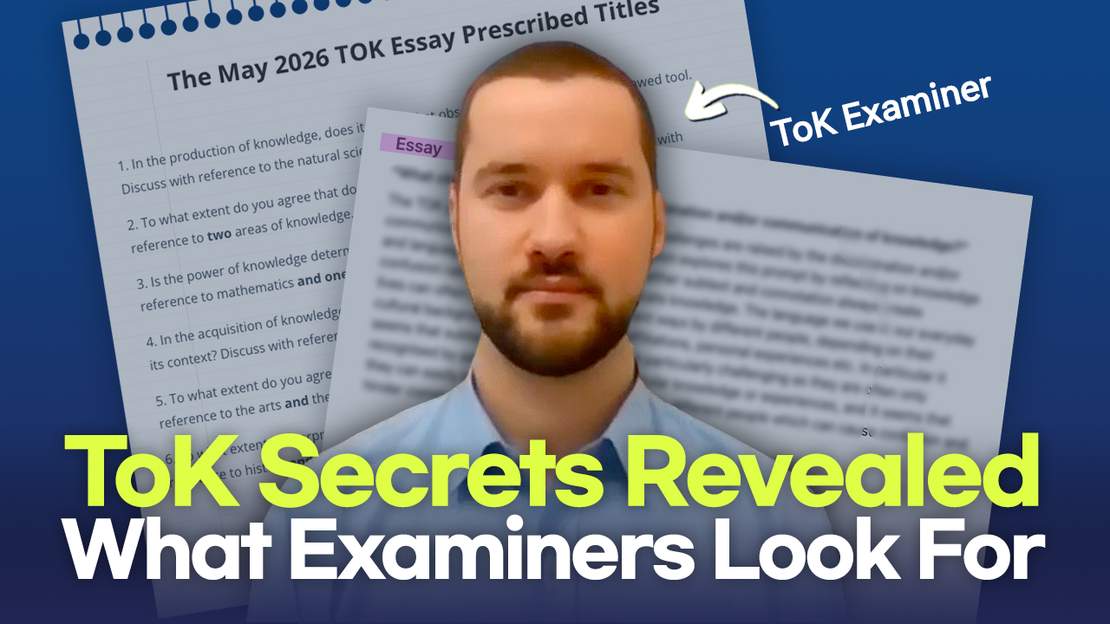
What is the hardest part of TOK? In this article, an experienced IB examiner explains why students struggle and what truly determines high scores. Learn how to approach TOK essays and exhibitions with clarity, structure, and confidence to achieve top results. Discover the common misconceptions that prevent students from moving beyond mid-level performance. Understand how depth of analysis, coherent argumentation, and intellectual ownership separate an average response from an outstanding one.

Introduction: Why TOK Feels So Uncertain

Among all IB subjects, Theory of Knowledge (TOK) is often perceived as the most unpredictable. Many students and parents share the same concern: Why is it so difficult to know how to get an A?

Unlike subjects such as Mathematics or Biology, TOK does not provide clear-cut answers that can be memorized or reproduced. In most subjects, students rely on textbooks, structured explanations, and model answers to secure high marks. In TOK, however, there is no formula that guarantees success.

This fundamental difference is precisely what makes TOK challenging. It requires students not simply to understand knowledge, but to question it.

Understanding this shift in expectations is the first step toward overcoming the difficulty.

The Core Difficulty of TOK

From the perspective of both an IB teacher and an official examiner, the main challenge students face in TOK is not language, nor writing structure, but a transformation in thinking.

TOK demands that students generate questions rather than search for definitive answers. It requires analysis from multiple perspectives and critical reflection on assumptions underlying knowledge claims.

For students accustomed to subjects with objective answers, this can be frustrating. The absence of certainty may feel like a lack of direction.

Success in TOK depends on developing a different academic attitude — one that values inquiry, nuance, and reflection over correctness.

How TOK Is Graded

Many students aim for an A or B, yet statistically most receive a B or C. An A is typically awarded only to essays that demonstrate exceptional clarity, coherence, and critical depth.

The final TOK grade consists of two components. The Essay accounts for two-thirds of the grade, and the Exhibition accounts for one-third. Students are graded on a scale from 1 to 10. Scores of 9–10 correspond to an A, 7–8 to a B, and so forth.

In recent years, TOK has adopted what is known as global impression marking. Rather than grading across multiple detailed criteria, examiners evaluate the work holistically on a single 1–10 scale.

For example, the central question in assessing the essay is: To what extent does the student present a clear, coherent, and critical analysis of the prescribed title?

This does not mean the marking is subjective. On the contrary, it is guided by precise descriptors that define what constitutes high-quality work. Students must therefore familiarize themselves with these descriptors to understand what excellence looks like.

Does English Proficiency Create a Disadvantage?

Many international students worry that limited English proficiency may disadvantage them in TOK.

Clarity is undeniably important. If ideas are poorly expressed, examiners cannot accurately evaluate the thinking. However, TOK does not assess language ability itself; it assesses thinking skills.

Students are given the opportunity to submit a draft and receive feedback. Teachers play a crucial role in helping students improve clarity and structure.

Language fluency alone does not determine success. Clear reasoning and well-developed analysis matter far more than stylistic perfection.

The Importance of the First Draft and Teacher Feedback

IB regulations allow teachers to provide general feedback on only one draft of the essay. This limitation can feel restrictive.

The first draft should therefore represent the student’s strongest independent effort. Teacher feedback is meant to refine and deepen the analysis, not rewrite the work.

In reality, teachers often manage large workloads and cannot provide extensive individualized support. This can pose a challenge for students seeking more guidance.

However, TOK is designed to cultivate independence. Students must take responsibility for understanding the assessment criteria and learning from exemplar essays.

How Predicted Grades Are Determined

For students applying to universities in countries such as the United States or the United Kingdom, predicted grades are crucial. Since university deadlines often occur before the final essay is externally graded, predicted grades are usually based primarily on the Exhibition and overall classroom performance.

While policies vary between schools, the intention is to make predicted grades as objective as possible, grounded in IB assessment standards rather than subjective impressions.

Therefore, the Exhibition plays a significant role, but consistent engagement and performance in class are also considered.

Conclusion: Preparing for TOK Successfully

Success in TOK is not a matter of luck. It is the result of sustained intellectual development over time.

TOK is a skill-based subject. The ability to analyze knowledge questions, compare perspectives, and reflect critically cannot be mastered in a few weeks. It requires ongoing practice.

When students understand that TOK is about thinking rather than memorizing, the subject becomes less intimidating and more intellectually rewarding.

Ultimately, high achievement in TOK stems from clarity, depth, and independent thought — not from searching for the “right” answer.

Theory of Knowledge

Theory of Knowledge

Facilis architecto quis maxime nam at, optio harum a velit nulla repellat ad culpa dolorem ab ducimus, porro enim fugit incidunt …

comments powered by Disqus