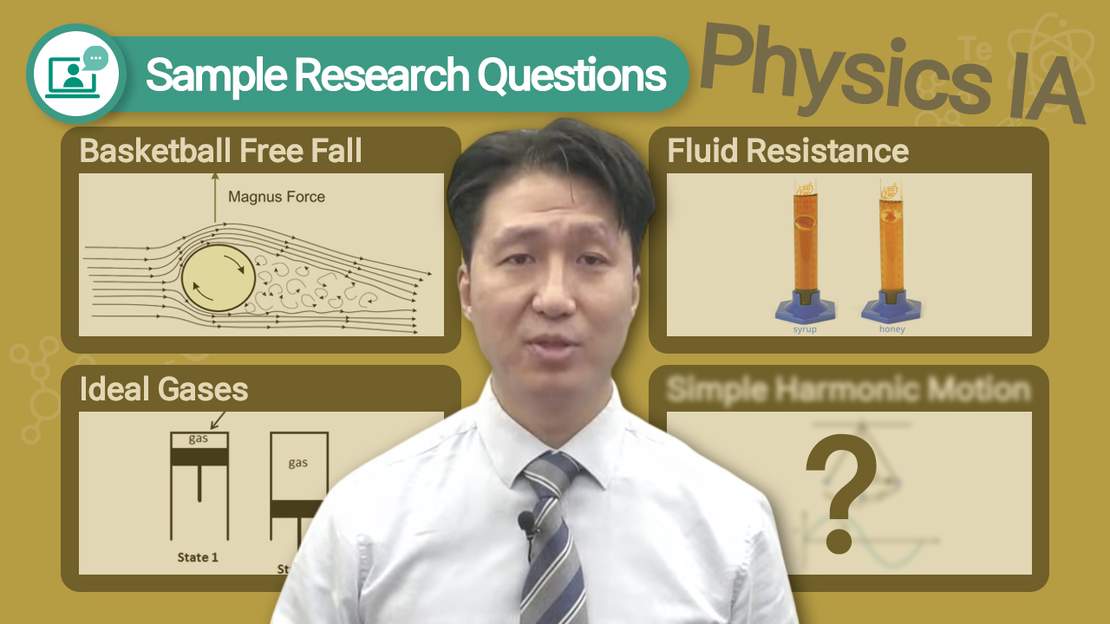

IB 물리 IA 주제는 가장 복잡한 개념을 고른다고 좋은 것이 아닙니다. 제대로 이해하고, 엄밀하게 실험하고, 깊이 있게 분석할 수 있는 개념을 골라야 합니다. 채점관은 화려한 물리보다 변수 통제, 이론적 이해, 비판적 평가, 그리고 명확성을 훨씬 높게 평가합니다.
아래 10가지 주제는 난이도만이 아니라 실현 가능성, 이론적 깊이, 득점 가능성을 기준으로 골랐습니다.
1. 포물선 운동에서의 마그누스 효과 (Magnus Effect in Projectile Motion)
가능한 연구 질문은 회전 속도가 낙하하는 공의 수평 변위(horizontal displacement)에 어떤 영향을 미치는지를 탐구하는 것입니다. 이 연구는 중력(gravity), 공기 저항(air resistance), 그리고 회전하는 물체에 작용하는 마그누스 힘(Magnus force)을 함께 고려해야 합니다. 이 주제는 재료 구하기가 쉽고 물리적 현상이 시각적으로 매력적이라는 장점이 있습니다. 그러나 마그누스 힘을 정확히 모델링하려면 고급 수학이 필요할 수 있습니다. 또한 초기 속도(initial velocity)와 공기 저항(air drag) 같은 변수들이 관계를 복잡하게 만듭니다. 세심한 통제와 모델링이 없다면 결과는 일관되지 않게 보일 수 있습니다. 교육과정 밖의 내용까지 다루는 데 부담이 없는 학생에게 맞는 주제입니다.
2. 유체에서 점도와 농도 (Viscosity and Concentration in Fluids)
설탕(수크로스) 농도가 점도에 미치는 영향을 조사하면 역학(mechanics)과 유체역학(fluid dynamics)을 연결합니다. 구체가 액체를 통과하며 떨어지는 속도를 측정하거나, 관을 통한 흐름(flow through a tube)을 분석하는 방식으로 점도를 측정할 수 있습니다. 재료는 쉽게 구할 수 있지만, 진짜 도전은 이론적 설명에 있습니다. 측정 방법에 따라 유효 점도(effective viscosity)가 달라질 수 있으며, 학생은 분자 간 힘(intermolecular forces)을 이해하고 경향을 정당화해야 합니다. 배경 조사를 탄탄히 하고 비판적으로 생각하는 학생일수록 좋은 결과를 얻는 주제입니다.
3. 회전 운동과 관성 모멘트 (Rotational Motion and Moment of Inertia)
경사면을 굴러 내려오는 원통의 최종 속도(final velocity)에 관성 모멘트(moment of inertia)가 미치는 영향을 탐구하는 것은 고전적이지만 강력한 연구입니다. 방정식은 잘 정립되어 있고 이론적 예측도 명확합니다. 그러나 회전 역학(rotational dynamics)은 개념적으로 도전적일 수 있습니다. 이 주제는 단순해 보이지만 토크(torque), 에너지 보존(energy conservation), 각운동(angular motion)에 대한 정확한 이해를 요구합니다. 이론 구조가 분명하고 모델링 결과를 예측하기 쉬운 주제를 원하는 학생에게 잘 맞습니다.
4. 비열과 염 농도 (Specific Heat Capacity and Salt Concentration)
염 농도(salt concentration)가 물의 비열(specific heat capacity)에 미치는 영향을 조사하는 것은 열역학(thermodynamics) 기반 연구입니다. 많은 학생이 이 주제를 과소평가합니다. 데이터 수집은 비교적 간단하지만, 설명은 분자 상호작용(molecular interactions)과 에너지 전달(energy transfer)에 대한 깊은 이해를 요구합니다. 해수에 대한 참고 데이터(reference data)가 이미 존재하기 때문에, 해석과 비교가 핵심 평가 요소가 됩니다. 이 경우, 실험의 새로움보다 분석적 깊이가 더 중요합니다.
5. 기체 압축 속도와 최종 온도 (Rate of Gas Compression and Final Temperature)
비단열 압축(non-adiabatic compression)의 속도가 기체의 최종 온도(final temperature)에 미치는 영향을 연구하는 것은 열역학, 역학, 에너지 전달을 통합합니다. 강력한 이론적 틀은 존재하지만, 실험 수행은 복잡할 수 있습니다. 기체 종류(gas type), 용기 재질(container material), 열 방출(heat dissipation)이 모두 결과에 영향을 미칩니다. 안전 고려와 세밀한 모델링 가정이 필요합니다. 상당한 연구 노력을 투자할 준비가 된 학생에게 적합합니다.
6. 편광과 프레넬 방정식 (Polarization and Fresnel Equations)
입사각(angle of incidence)이 편광된 빛의 반사율(reflectance)과 투과율(transmittance)에 미치는 영향을 연구하는 것은 파동 물리(wave physics)의 고급 영역입니다. 이 주제는 수학적 모델링과 이론적 논의를 위한 훌륭한 기회를 제공합니다. 그러나 전문 장비와 높은 정밀도가 요구됩니다. 각도 측정의 작은 오차도 결과를 크게 왜곡할 수 있습니다. 수학적으로 자신 있는 학생에게는 도전적이지만 보상이 큰 주제입니다.
7. 배터리 내부 저항과 온도 (Internal Resistance of Batteries and Temperature)
온도가 충전식 배터리의 내부 저항(internal resistance)에 미치는 영향을 탐구하는 것은 전자기학(electromagnetism)과 전기화학(electrochemistry)을 결합합니다. 재료는 쉽게 구할 수 있지만, 해석에는 저항률(resistivity)과 배터리 구조에 대한 이해가 필요합니다. 온도는 정밀하게 통제되어야 하며, 분석에서는 화학적 과정도 고려해야 합니다. 시작하기는 쉽지만, 여러 이론을 엮어 설명하는 힘이 필요합니다.
8. 자기 투자율 측정 (Determining Magnetic Permeability)
솔레노이드(solenoid)를 사용하여 공기의 상대 투자율(relative permeability)을 측정하는 것은 자기장 계산(magnetic field calculations)과 실험 검증을 포함합니다. 이론적 틀은 잘 확립되어 있어 수용된 상수와 비교할 수 있습니다. 그러나 많은 학생이 자기 측정에서 숨겨진 변수(hidden variables)를 과소평가하여 실험 설계에 결함이 생깁니다. 정밀성과 계획이 성공을 좌우합니다.
9. 도선 굵기와 발전기 효율 (Wire Gauge and Generator Efficiency)
도선 굵기(wire gauge)가 발전기 효율(generator efficiency)에 미치는 영향을 연구하는 것은 공학적 응용을 포함한 전자기학 주제입니다. 이 연구는 복잡합니다. 발전기 효율은 단순한 저항 외에도 여러 요인이 함께 작용해 결정됩니다. 제작과 측정이 어려울 수 있으며, 분석에서는 에너지 손실을 종합적으로 고려해야 합니다. 어렵지만 잘 수행하면 돋보일 수 있는 주제입니다.
10. 일반적인 실험을 창의적으로 개선하기 (Refining Common Experiments Creatively)
때로는 완전히 새로운 개념이 아니라, 기존의 일반적인 실험을 창의적으로 개선하는 것이 최고의 IA가 될 수 있습니다. 동급생이 유사한 주제를 다루더라도, 재료, 측정 기법, 모델링 접근 방식의 차이가 독창성을 만들어냅니다. 독창성은 주제 자체가 아니라 실행 방식에 있습니다.
결론
궁극적으로, 주제 자체가 성적을 결정하지 않습니다. 이론을 얼마나 깊이 이해하고, 통제된 실험을 설계하며, 결과를 비판적으로 분석하느냐가 성공을 결정합니다. 두 학생이 동일한 물리 원리를 연구하더라도 매우 다른 점수를 받을 수 있습니다. 차이를 만드는 것은 깊이, 명확성, 그리고 탐구를 스스로 이끌어 가는 주인의식입니다. IB 물리(IB Physics) IA에서 성공은 가장 “어려운” 주제를 선택하는 것이 아닙니다. 자신이 수행하는 물리학을 진정으로 이해하고 있음을 보여주는 것입니다.